


Brama obrotowa: Typy, Specyfikacje, Przypadki użycia, oraz Jak wybrać właściwe
2026-03-17


Brama z przewracalną barierą jest jedną z najbardziej elastycznych i estetycznie wszechstronnych dostępnych bramek kontroli dostępu — i jest to rozwiązanie podstawowe dla obiektów wymagających szerokiego dostępu, Czysty, nowoczesny projekt, lub zgodne z ADA dla pieszych obok standardowych pasów bramek obrotowych. Niezależnie od tego, czy wybierasz jedno wejście do lobby, czy wielopasmowy punkt kontrolny na kampusie, Zrozumienie typów, Specyfikacja techniczna, Różnice w przypadku użycia odróżniają dobrą instalację od takiej, która przez lata powoduje problemy.
Ten przewodnik obejmuje wszystko – od zasad działania i klasyfikacji po konkretne warianty produktu oraz jasne ramy selekcji.
Czym jest brama obrotowa?
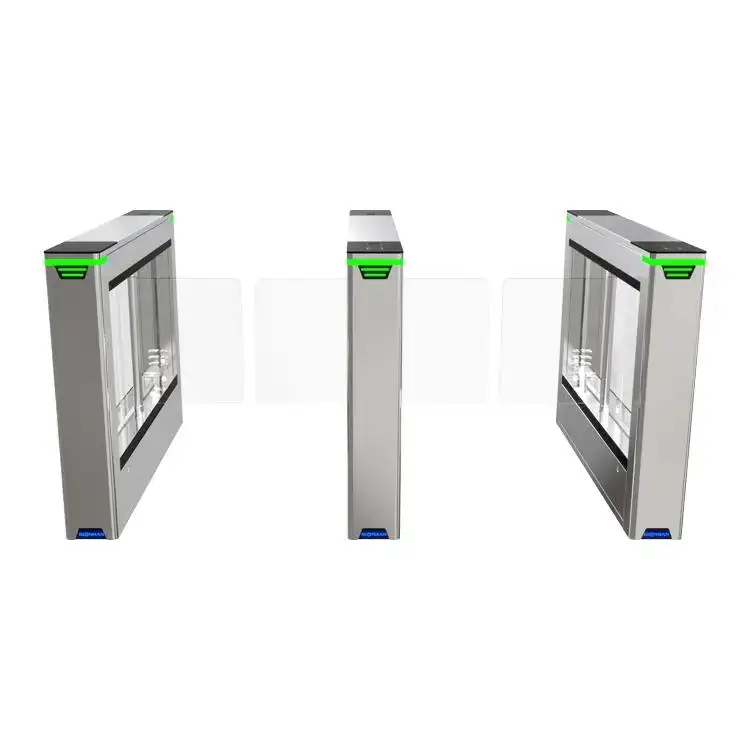
Brama przechylająca to system kontroli dostępu pieszych, gdzie bariera blokująca — płaski panel wykonany z hartowanego szkła, Stal nierdzewna, lub akryl — otwiera się prostopadle do tora, gdy wręcz się ważny dokument, następnie po przejściu wraca do pozycji zamkniętej i zablokowanej.
Ruch obrotowy obejmuje łuk ±90°. W pozycji zablokowanej, panel całkowicie blokuje pas. O zatwierdzaniu uprawnień, Silnik napędza panel do otwarcia się w 0,3–0,5 sekundy. Po przejściu osoby — wykrytej przez matrycę sensorów podczerwieni — panel cofa się i blokuje.
Kluczową różnicą operacyjną w porównaniu do bramek z klapką jest kierunek ruchu panelu. Bramka z klapką chowa paneledo Korpus szafy. Brama przechylająca się na paneluNa zewnątrz wzdłuż łuku. Oznacza to, że brama obrotowa może pomieścić znacznie szersze otwory na pasy — zazwyczaj od 550 mm do 1 500 mm — co czyni ją naturalnym wyborem dla osób na wózkach inwalidzkich, Wózki bagażowe, Rowery, oraz szerokie pasy premium punktów wejścia.
Jak działa brama obrotowa
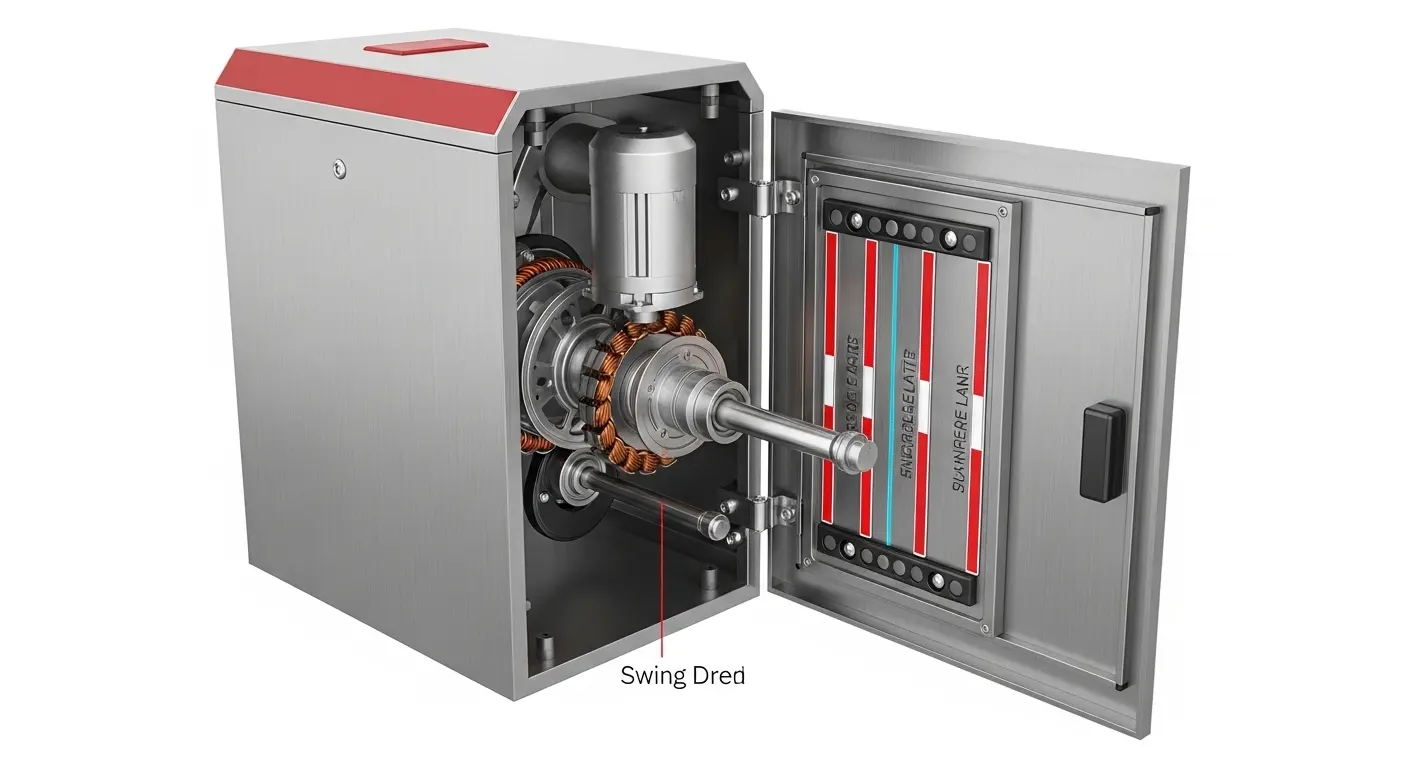
Sekwencja operacyjna przebiega następująco. Użytkownik przedstawia dane uwierzytelniające — kartę RFID, Kod QR, Odcisk palca, lub twarz — do czytnika zintegrowanego lub zamontowanego obok bramki. Czytnik to potwierdza i wysyła sygnał suchego kontaktu lub RS485 na płytę sterującą bramki obrotowej. Bezszczotkowy silnik napędza panel barierowy do otwarcia się.
Wiele par czujników podczerwieni — zazwyczaj 6–12 par w modelach komercyjnych — monitoruje strefę przejścia przez cały cykl. Pełnią trzy funkcje:
- Wykrywanie przejścia: Potwierdź, że ktoś oczyścił pas, zanim wywołam ponowne zamknięcie
- Wykrywanie antytailgatingowe: Powiadomić, jeśli druga osoba wejdzie przed zamknięciem panelu
- Ochrona przeciwszczypająca: Natychmiast zatrzymaj i cofnij panel, jeśli podczas zamykania wykryje się przeszkodę — siła kontaktu utrzymuje się poniżej 2 kg
Przy awarii zasilania, Brama bariery obrotowej domyślnie przełącza się na tryb awaryjny — panele otwierają się automatycznie, umożliwiając niekontrolowaną ewakuację, zgodnie z przepisami budowlanymi o bezpieczeństwie pożarowym na większości rynków.
Rodzaje bram obrotowych
Nie każda brama z barierą swing pasuje do każdego środowiska. Oto jak rozkładają się główne warianty i gdzie każdy z nich się wpisuje.
Standardowa brama obrotowa
Bazowa konfiguracja komercyjna. Szafka ze stali nierdzewnej SUS304, 550–900 mm szerokości pasa, Bezszczotkowy silnik prądu stałego, oraz detekcję wielowiązkową w podczerwieni. Dla lobby korporacyjnych, Przestrzenie coworkingowe, oraz środowiska tranzytowe, theBrama obrotowa Obejmuje wszystkie podstawowe wymagania — na tyle szerokie, by umożliwić dostęp do przejścia, wystarczająco szybki do środowisk o dużym natężeniu ruchu, i wystarczająco czyste w wyglądzie, by zapewnić ekskluzywne wnętrza.
Brama z przewagą przeciwwspinaczkową
Standardowe bariery obrotowe blokują boczne przejście przez wejście pasa. Jednak, Wysokość panelu w standardowym modelu zwykle wynosi 900–1200 mm — co pozostawia fizyczną szczelinę nad panelem, po której zdeterminowana osoba mogłaby się wspiąć. AnBrama przeciwwspinaczkowa wydłuża wysokość panelu barierowego do 1 800 mm lub więcej, eliminując lukę przejścia bez przyjęcia pełnego profilu bramki pełnej wysokości od podłogi do sufitu. W rezultacie, To właściwe rozwiązanie dla środowisk o średnim i wysokim poziomie bezpieczeństwa, gdzie liczy się fizyczne zapobieganie omijaniom, ale sprzęt o pełnej wysokości nie jest uzasadniony.
Biometryczna bramka obrotowa przeciwwspinaczkowa
W przypadku wdrożeń, gdzie wymagane są zarówno fizyczne zapobieganie wspinaczce, jak i weryfikacja tożsamości na poziomie poświadczenia, aBiometryczna bramka obrotowa przeciwwspinaczkowa łączy panel o wydłużonej wysokości z wbudowanym czytnikiem do rozpoznawania linii papilarnych lub twarzy. Ta konfiguracja jest dostosowana do centrów danych, Instytucje finansowe, Strefy ograniczone rządowe, oraz placówki farmaceutyczne — środowiska, w których wymiana identyfikatorów lub tailgating na wejściu stanowi bezpośrednie ryzyko zgodności.
Stalowa brama obrotowa
Jakość materiałowa ma bezpośredni wpływ na żywotność w wymagających warunkach. AStalowa brama obrotowa zbudowany z konstrukcji SUS304 z pełnym spawaniem, zapewnia wymiernie lepszą odporność na degradację powierzchni, Dzienne obciążenia uderzeniowe, oraz narażenie na chemikalia czyszczące w porównaniu z alternatywami dla metali miękkiej pomalowanej proszkowo. Dla środowisk komercyjnych o wysokim kontakcie — lobby hotelowe, Kluby fitness, wejścia do szpitala — wykończenie SUS304 zachowuje swój wygląd także przez lata użytkowania bez odświeżania powierzchni.
Brama z bramą obrotową z czytnikiem kart
W obiektach, które wymagają czytnika poświadczeń zintegrowanego bezpośrednio w szafie bramy — zamiast montowanego na osobnym postumencie —Brama z bramą obrotową z czytnikiem kart zapewnia czysty, Instalacja jednojednostkowa. Czytnik jest fabrycznie dopasowany do szafy na odpowiedniej ergonomicznej wysokości, Wstępnie podłączone do płyty sterującej, i wyrównany z pasem dla naturalnego ustawienia odczepów — eliminując dodatkową złożoność sprzętu i okablowania osobnego podstawy czytnika.
Kompaktowa bramka obrotowa z bramą obrotową
Standardowe szafy bramowe z przewracalną bramą mają długość od 1 200 do 1 500 mm. Dla instalacji o ograniczonej powierzchni — wejścia pomocnicze dla personelu, Punkty kontrolne w lobby wind, Wąskie korytarze —Kompaktowa bramka obrotowa z bramą obrotową zmniejsza powierzchnię szafy bez kompromisów w szerokości panelu, Zasięg czujników, lub sprawność motoryczna. Pozwala to na zastosowanie w pełni funkcjonalnej bariery wahadłowej w miejscach, których standardowa szafa fizycznie nie mieści.
Bezszczotkowa bariera z silnikiem obrotowym: Dlaczego mechanizm napędowy ma znaczenie
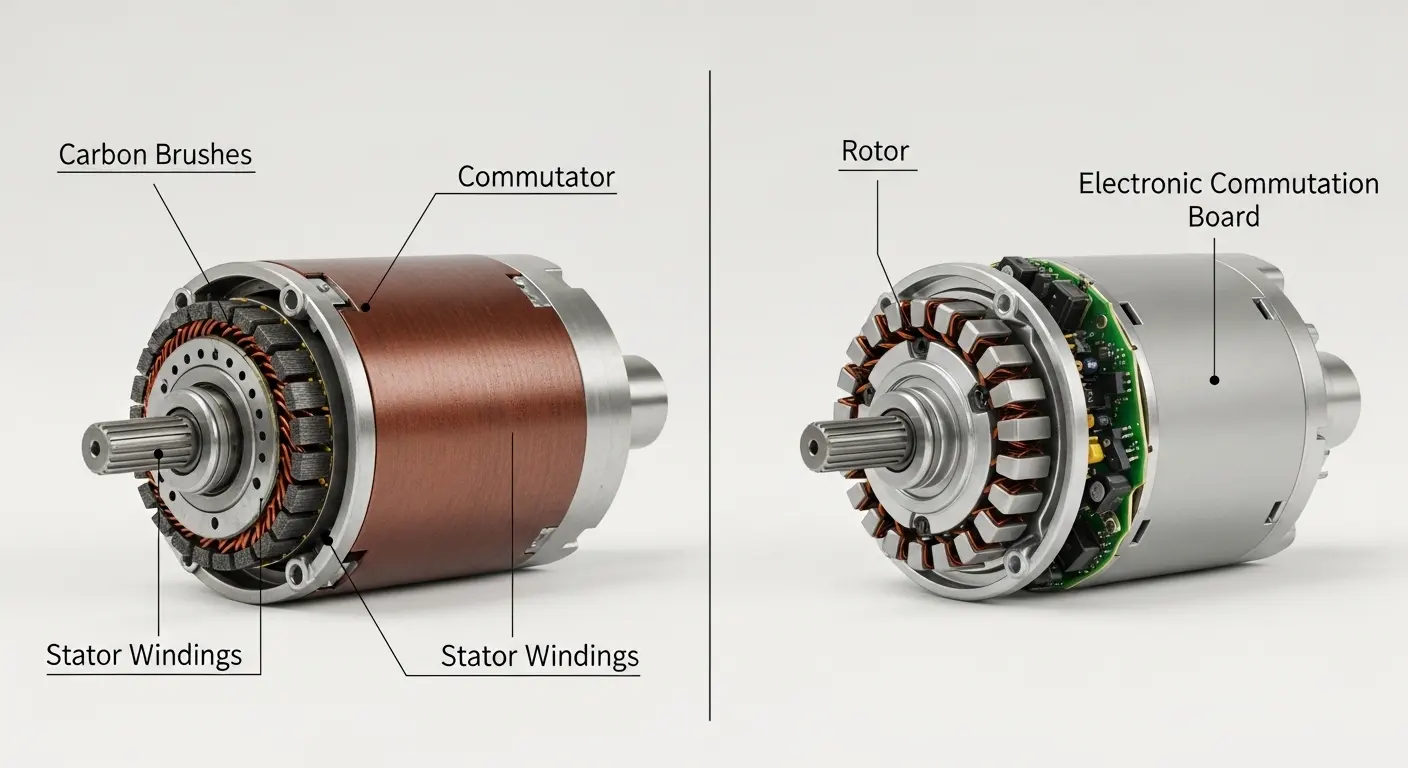
Silnik wewnątrz bramki bariery obrotowej jest elementem decydującym o żywotności cyklu, Poziom hałasu, oraz częstotliwość długoterminowej konserwacji — nie materiał obudowy ani projekt panelu. To najważniejsza specyfikacja, którą większość kupujących pomija.
Standardowy silnik stały opiera się na szczotkach węglowych do przekazywania prądu do obracającej się kotwicy. Szczotki te zużywają się z czasem — zazwyczaj wymagają wymiany po 500 000–1 milionie cykli. ABezszczotkowa bariera obrotowa silnika Całkowicie eliminuje kontakt szczoteczki. Silnik wykorzystuje elektroniczne komutowanie, która daje:
- Dłuższy cykl życia: 3–5 milionów cykli vs. 500K–1M dla szczotkowanego prądu stałego
- Niższy poziom szumu: Brak tarcia szczotki — ważne w hotelowych holach, Biblioteki, oraz ciche środowiska biurowe
- Mniej generowania ciepła: Niższa temperatura pracy wydłuża żywotność płyty sterującej i silnika
- Brak zaplanowanej wymiany szczotki: Zmniejsza koszty utrzymania w trakcie eksploatacji bramki
Dla obiektów obsługujących bramę obrotową w ciągu 12–16 godzin dziennie — stacje tranzytowe, Centrala, Szpitale — Bezszczotkowy silnik zwraca się dzięki mniejszej liczbie wizyt serwisowych i dłuższym interwałom serwisowym.
Dwukierunkowa brama obrotowa: Wejście i wyjście przez jedną jednostkę
Dla instalacji, gdzie nie można wybrać oddzielnych pasów wjazdu i wyjazdu ze względu na ograniczenia przestrzeni, aDwukierunkowa brama obrotowa zarządza obiema kierunkami przejścia przez tę samą szafkę. Tablica sterująca obsługuje logikę kierunkową — odczytuje, czy poświadczenie jest prezentowane od strony wejściowej, czy wyjściowej, i odpowiednio wyzwala odpowiedni kierunek zamachu.
W dodatku, Modele dwukierunkowe wyposażone są w niezależne matryce czujników podczerwieni dla obu kierunków ruchu, Więc wykrywanie przeciw tailgatingowi i ochrona przed szczypaniem działają poprawnie w obu kierunkach. Ta konfiguracja jest dostosowana do wejść do budynków pomocniczych, Korytarze tylko dla personelu, oraz każdy punkt dostępu do sieci, gdzie sprzęt jednopasmowy obejmuje zarówno wejście i wyjście.
Dla obiektów wymagających prędkości wraz z kontrolą dostępu z barierami wahającymi się — na przykład w ekskluzywnym terminalu lotniskowym lub lobby ministerstwa rządowego —bramka przyspieszająca pieszych reprezentuje alternatywę o wyższej przepustowości, przetwarza 50–80 osób na minutę z estetyką szklanych paneli, która uzupełnia bramę obrotową stosowaną w sąsiednich pasach ADA.
Brama z barierą obrotową vs. Bramka z klapką: Którego naprawdę potrzebujesz?
To najczęściej stosowane porównanie przez kupujących przed wyborem systemu dostępu pieszego. Oto szczere podsumowanie:
| Cecha | Brama obrotowa | Bramka z klapką |
|---|---|---|
| Szerokość pasa | 550–1 500mm (regulowany) | 550–900mm |
| Zgodność z ADA | Naturalne dopasowanie (Szeroki pas) | Wymaga modelu z wydłużonym pasem |
| Plastyczność wyglądu | Wysoki (szkło, Akrylowe, stal) | Bardziej ustandaryzowany |
| Przepustowość | 30–40 ppm | 35–60 ppm |
| Anty-tailgating | Dobry (6–12 par czujników) | Silny (6–12 par) |
| Możliwości zewnętrzne | Niektóre modele IP54 | Głównie wewnętrzne IP4X |
| Najlepsze dla | Lobby, Paniki ADA, szeroki dostęp | Tranzyt, Biura, Wysoka przepustowość |
| Koszt | Średni zakres | Średni zakres |
Podstawową decyzją jest szerokość kanału. Jeśli Twój obiekt potrzebuje pasa szerszego niż 900 mm — dla wózków inwalidzkich, Wózki bagażowe, Rowery, lub wózki towarowe — brama obrotowa to właściwy wybór. Jeśli priorytetem jest maksymalna przepustowość w standardowym pasie dla pieszych o średnicy 550 mm, bramka z klapką przewyższa ją.
Dla większości instalacji wielotorowych, Oba typy współistnieją: Bramki z klapkami obsługują główne pasy przepływu pieszych z prędkością 40–60 ppm, z jednym pasem bramowym z bramą typu swing barrier zapewniającym szeroki dostęp zgodny z ADA obok nich.
Gdzie rozstawiane są bramki barierowe obrotowe
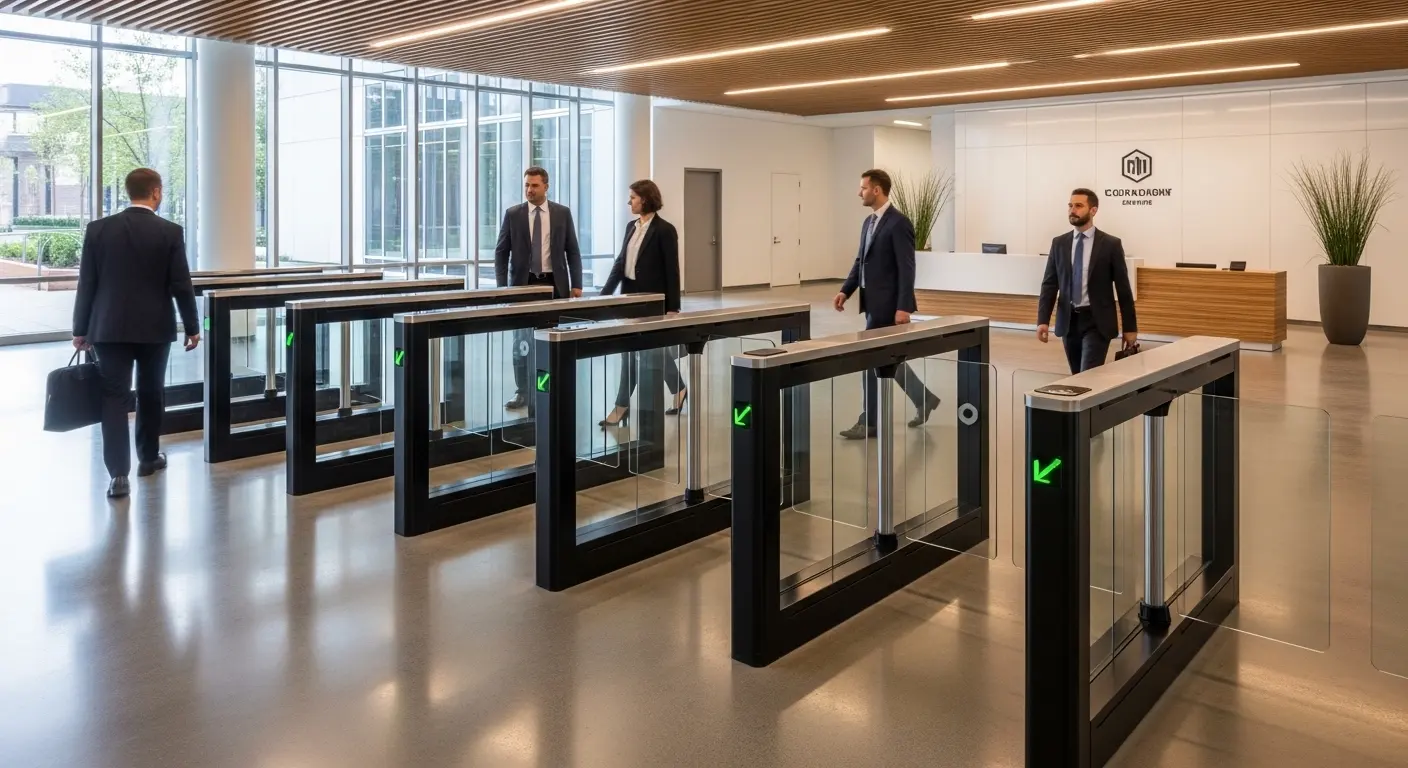
Brama z przewracalną barierą pasuje niemal do każdego pomieszczenia wewnętrznego lub półzewnętrznego, gdzie szeroki pas, Wymagana jest estetycznie czysta kontrola dostępu:
Lobby biura korporacyjnego
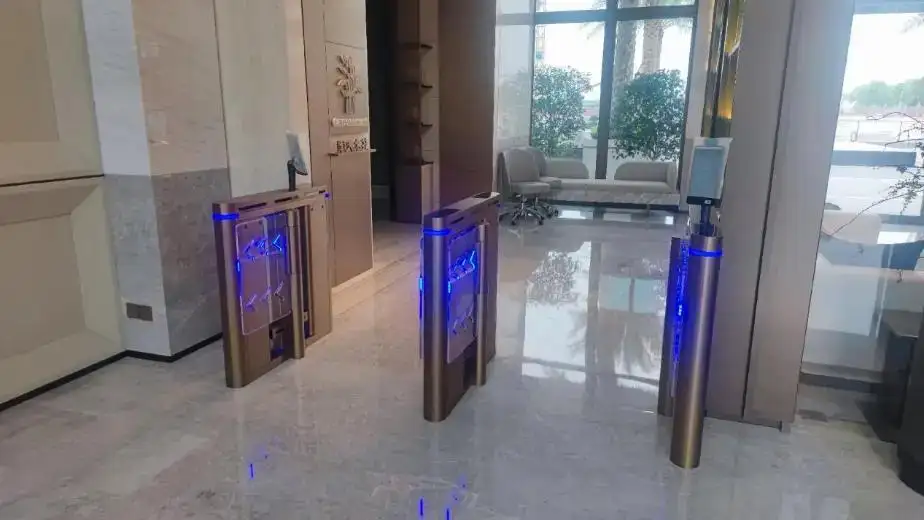
Najczęstsze wdrożenie. Główne pasy wjazdu mają klapy lub bramki prędkościowe; jeden lub dwa pasy bram z przewracalnymi barierami zapewniają zgodność z ADA i dostęp VIP bez konieczności stosowania osobnego typu bramki.
Hotele i luksusowe nieruchomości mieszkalne
Bramy obrotowe lepiej pasują do architektonicznie wysokiej jakości wnętrz niż bramki z trójnogami. Szklane lub polerowane panele akrylowe, Szafki ze stali szczotkowanej, a ciche bezszczotkowe silniki pasują do wysokiej klasy lobby, gdzie hałas mechaniczny lub industrialny wygląd byłyby nie na miejscu.
Szpitale i placówki opieki zdrowotnej
Szeroki pas ruchu dla wózków inwalidzkich, Łóżka szpitalne, Wózki medyczne, oraz pomocy w poruszaniu się. Ochrona przeciwszczypająca (Siła zamykania poniżej 2 kg) jest niepodlegającym negocjacjom wymogiem w środowiskach opieki zdrowotnej.
Węzły transportowe i stacje metra
Dostępne pasy na stacjach metra, Lotniska, a terminale promowe potrzebują bram typu swing barrier, aby pomieścić pasażerów z bagażem, wózki, oraz urządzenia mobilności obok standardowych pasów bramek taryfowych.
Szkoły, Biblioteki, oraz muzea
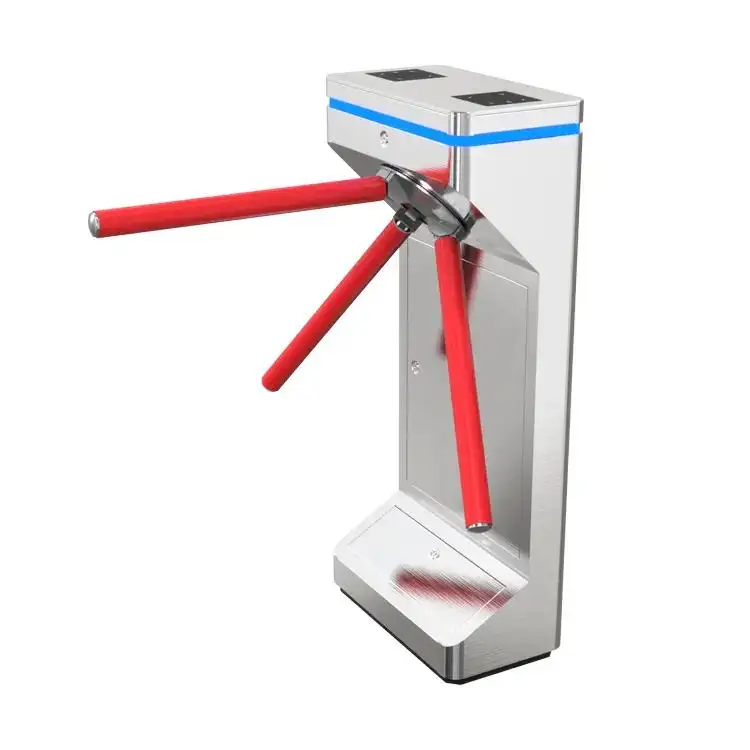
Student, Gościem, oraz dostęp do poświadczeń personelu przy wejściach do budynków. Cicha, bezszczotkowa brama obrotowa z silnikiem utrzymuje klimat środowiska edukacyjnego lub kulturalnego bez słyszalnego kliknięcia mechanizmu ramienia statywu.
Fabryki i obiekty przemysłowe
Modele bram obrotowych z możliwością pracy na zewnątrz (IP54 ) Na punktach wejścia zmiany obsługują dostęp pracowników za pomocą rejestracji czasu pracy i obecności. Modele z szerokim pasem umożliwiają pracownikom wyposażenie w środki ochrony osobistej, Torby na narzędzia, oraz tramwaje, które standardowy pas trójnogowy blokowałby.
Kluczowe wymagania do oceny przed zakupem
Porównując dowolne dwa modele bramek obrotowych, najpierw sprawdź te parametry:
| Specyfikacja | Poziom podstawowy | Klasy komercyjnej |
|---|---|---|
| Typ silnika | Podstawowy DC | Bezszczotkowy prąd stały |
| MCBF | 1–2M cykli | 3–5M cykli |
| Materiał panelowy | Akrylowe | Szkło hartowane |
| Materiał do obudowy | SUS304, 1.2Mm | SUS304, 1.5mm pełny spawał |
| Pary czujników | 4–6 | 8–12 |
| Szerokość pasa | 550–700mm | 550–1 500mm |
| Ocena IP | IP4X (Kryty) | IP54 (Pół-outdoor) |
| Komunikacja | Suchy kontakt | RS485 + TCP/IP |
| Czas otwarcia | 0.5–1,0 | 0.3–0,5 s |
Liczba par sensorów jest często niedoceniana na arkuszach specyfikacji. 4–6 par obejmuje podstawowe wykrywanie przejścia. 8–12 par mapuje pełną strefę przejścia w czasie rzeczywistym — rozróżniając pojedynczego pieszego, Użytkownik wózka inwalidzkiego, tailgater, oraz worek z więzami. Różnica ta pojawia się w częstotliwości fałszywych alarmów podczas pracy w rzeczywistym świecie.
Najczęściej zadawane pytania dotyczące bramek z barierami obrotowymi
Q: Czym jest bramka obrotowa i czym różni się od bramki z klapką?
A: Brama bariery obrotowej kontroluje przejście za pomocą panelu, który otwiera się na łuku ±90°. Bramka z klapką wykorzystuje panele, które chowają się do korpusu szafy. Kluczową praktyczną różnicą jest szerokość pasa — brama obrotowa otwiera się na 550–1500 mm, Czyniąc go odpowiednim dla osób na wózkach inwalidzkich, bagaż, oraz rowery. Bramka z klapą zazwyczaj otwiera się na 550–900 mm i zapewnia wyższą przepustowość na minutę w standardowych pasach dla pieszych.
Q: Czy brama obrotowa jest zgodna z ADA?
A: Tak — jeśli jest to określone z szerokością pasa co najmniej 813 mm (32 Cali), minimum ADA dla przejścia na wózku inwalidzkim. Większość komercyjnych modeli bram obrotowych oferuje szerokości pasów od 550 mm do 1 500 mm i mogą być określone do dokładnej szerokości wymaganej do zgodności z ADA. Mechanizm obrotowy otwiera się w całości, a nie częściowo cofa, co zapewnia jasny, Niezakłócony przejazd dla osób na wózkach inwalidzkich oraz urządzeń mobilnych.
Q: Czy brama obrotowa może być zainstalowana na zewnątrz??
A: Tak, z odpowiednią wartością IP. Standardowe modele wewnętrzne mają IP4X. Do instalacji na zewnątrz lub pół-zewnętrznych, określ minimum IP54 (Chroniony przed pyłem, Woda kierunkowa). Dla środowisk w pełni odsłoniętych, Wymagane jest podanie IP65. Zawsze poproś o niezależny raport testowy dotyczący oceny IP — a nie tylko o specyfikację producenta.
Q: Jaka jest standardowa przepustowość bramki bariery obrotowej?
A: Bezszczotkowa brama obrotowa z silnikiem DC przetwarza około 30–40 osób na minutę. Jest niżej niż bramka z klapką (35–60 ppm) ze względu na szerszy łuk zamachu, co wymaga więcej czasu na cykl. Dla instalacji, gdzie przepustowość jest podstawowym wymogiem, Bariery klapkowe lub bramki prędkościowe przewyższają bramki wahadłowe. Bramy z przepustami obrotowymi to właściwy wybór, gdy szerokość pasa i dostępność mają większe znaczenie niż szczytowa przepustowość.
Q: Jakie uprawnienia działają z bramą barierową obrotową?
A: Nowoczesne bramy obrotowe akceptują karty RFID (IC/ID/NFC), Kody QR, Kody kreskowe, Biometria odcisków palców, Kamery rozpoznawające twarz, oraz systemy detekcji temperatury. Płytka sterująca łączy się przez suchy kontakt, RS485, TCP/IP, lub Wiegand — co uczyniło go kompatybilnym praktycznie ze wszystkimi zewnętrznymi platformami kontroli dostępu i rejestracji czasu pracy.
